FOREWORD
Delivering Data Justice
Increasingly sophisticated technologies are being developed to predict the weather, while vast parts of the world still lack the means to adequately observe what is happening today.
There is something deeply troubling about this contradiction.
Weather and climate observations are a global public good. Every country depends on them, yet the resources available to generate and sustain them are profoundly unequal.
This year, SOFF developed an approach to measure countries' economic capacity to finance basic weather observations, comparing their GDP with the geographical area requiring observations. The results are striking. For every square kilometer requiring internationally agreed and mandatory observations, Switzerland has approximately 254,000 times greater economic capacity to finance them than Kiribati. Yet both countries contribute to the same global observing system.
These inequalities have consequences. Recent research found that a seven-day-ahead forecast in a high-income country is, on average, as accurate as a one-day-ahead forecast in a low-income country. And because the atmosphere knows no borders, missing observations in one country weaken forecasts elsewhere.
We risk flying blind at the very moment we need to see further ahead.
This is why this year’s report focuses on data justice. We need to ensure that every country has the means to generate and share essential observations, with support that reflects different economic capacities.
Delivering data justice is at the core of SOFF’s action. Five years ago, 193 countries and territories called for the creation of SOFF. WMO, UNDP and UNEP responded by establishing SOFF as the United Nations financing mechanism to help close these gaps. Today, that commitment is transforming into results.
With SOFF support, 64 countries have started to strengthen their observing capacity, 26 have entered the Investment Phase, and USD 133 million in investments has been approved. Across the portfolio, more than 50 stations are already sharing additional observations internationally.
These achievements reflect the leadership of countries and their national meteorological services, working alongside Peer Advisors, Implementing Entities, WMO as Technical Authority and funding partners.
But decades of previous failed investments have taught us that installing a weather station is not the same as sustaining an observation. Too often, funding ended, stations stopped operating and progress was lost. The adoption of SOFF's Compliance Phase Framework in 2026 is a defining milestone. It establishes a pathway to fulfil a promise made when SOFF was created: continued financial and technical support for as long as countries keep their observing systems operational and share observations internationally.
Much remains to be done. More than 100 countries have requested SOFF support. As Bhutan's Prime Minister, H.E. Tshering Tobgay, reminded us: “No nation should be left behind simply because it lacks the means to observe and to respond.”
We cannot build the future of weather forecasting while neglecting its foundations, and we cannot expect countries with very limited resources to sustain those foundations alone.
"We risk flying blind at the very moment we need to see further ahead"
SOFF IN NUMBERS
4.5
years
in operation
USD 158M pledged
by 12 funding partners
100+ countries
requested SOFF support
64 countries
receiving initial support
26 countries
in investment phase
+50 first stations
sharing data
A MESSAGE FROM THE STEERING COMMITTEE CO-CHAIRS
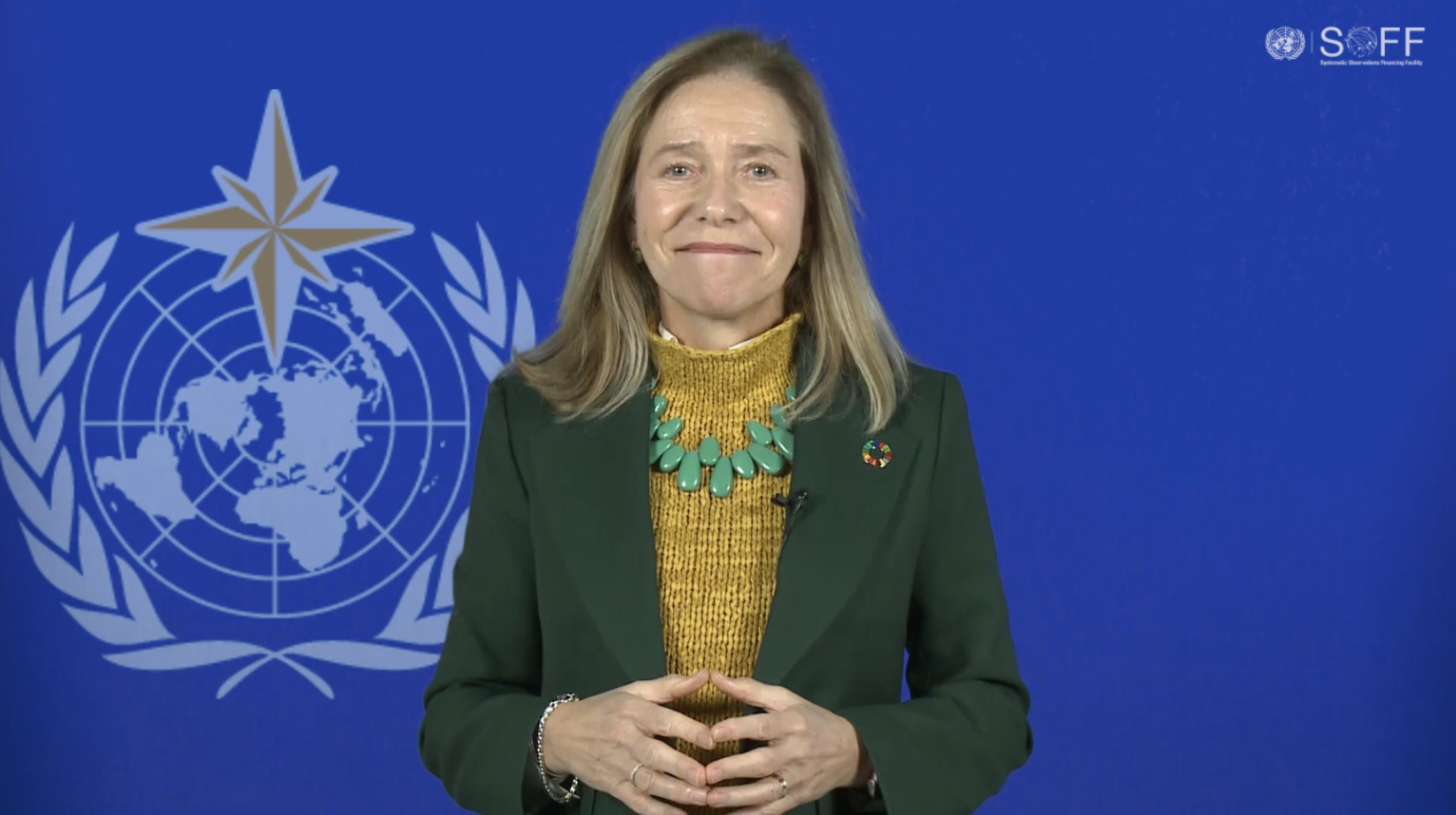
Professor Celeste Saulo
Secretary General, World Meteorological Organization
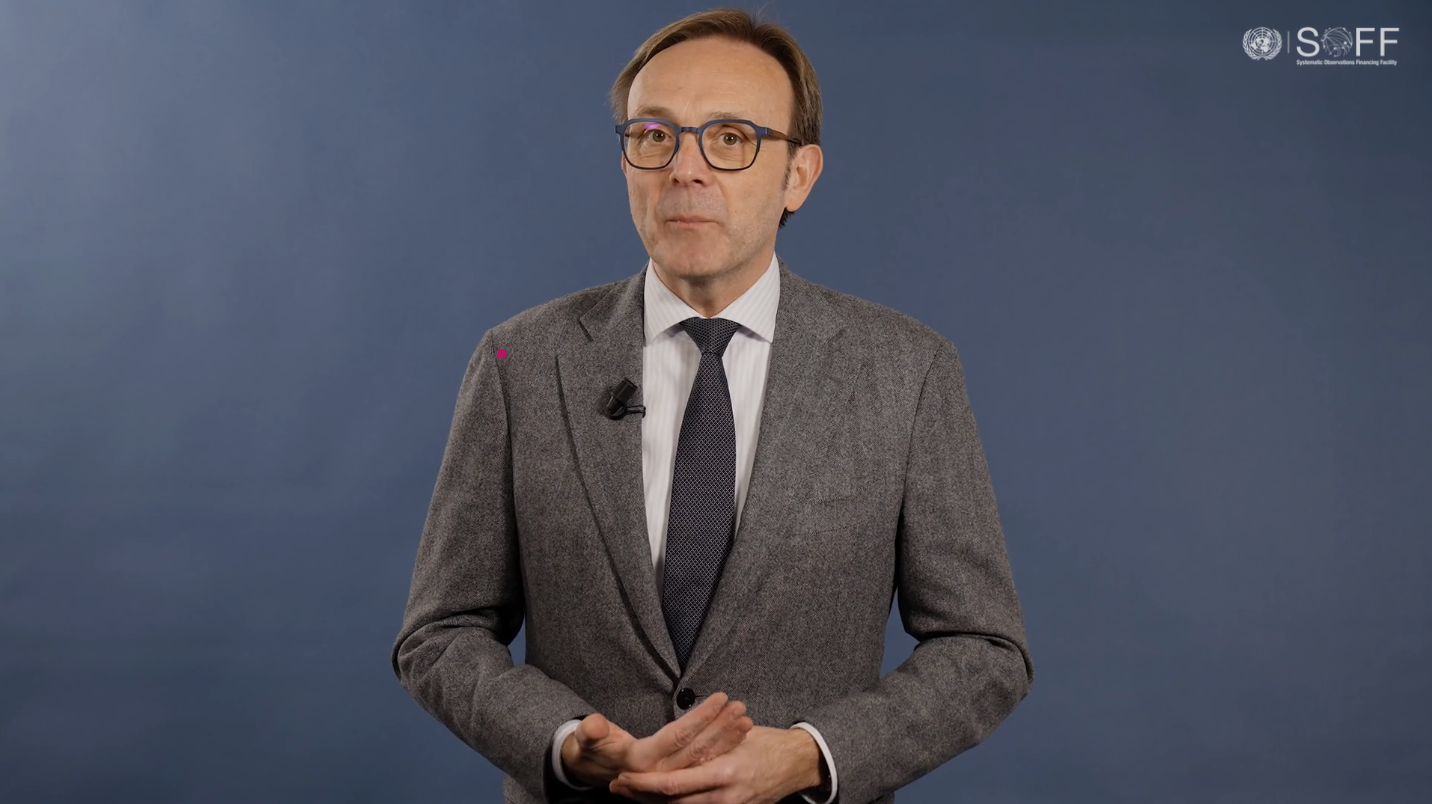
Ambassador Francois Dumont
Special Envoy Climate & Environment, Federal Public Service Foreign Affairs, Foreign Trade & Development Cooperation, Belgium
2026 HIGHLIGHTS

11 February 2026
Malawi: SOFF Project was launched for stronger weather observations
After nearly 20 years without upper-air observations, Malawi is restoring a critical component of its national meteorological system. The Government launched the SOFF Malawi Project in partnership with UNDP and a USD 3.84 million SOFF investment that complements CREWS investments in the country. The project also builds on previous Green Climate Fund (GCF) financing, which supported the installation of 33 automatic weather stations, helping strengthen international data exchange and sustain the benefits of earlier investments.
19 February 2026
Five additional countries approved for SOFF Investment
The 13th Steering Committee approved investments in Zambia, Cuba, Bangladesh, Guyana and the Democratic Republic of the Congo (DRC) for a total of USD 19.5M
February 2026
The SOFF monitoring dashboard went live
The Dashboard provides an overview of how countries and partners are progressing across SOFF’s three phases. By making implementation data publicly accessible, the Dashboard supports informed decision-making, reinforces accountability across the partnership, and contributes to closing critical weather and climate observation gaps.
March 2026
Green Climate Fund evaluation highlighted SOFF’s role in sustaining weather and climate observation systems
The independent evaluation of the GCF’s Climate Information and Early Warning System portfolio highlighted the importance of sustained support for weather and climate observation systems and recognized SOFF as a core actor for addressing long-standing sustainability challenges in developing countries.
29 May 2026
São Tomé and Príncipe, Dominican Republic and Suriname were approved for SOFF Investments
The 14th Steering Committee approved USD 6.85 million in investments for São Tomé and Príncipe, the Dominican Republic and Suriname, bringing the number of countries in Investment phase to 26.
29 May 2026
SOFF Compliance Framework was approved
The 14th Steering Committee approved the SOFF Compliance Phase Framework, which will guide results-based support for the operation and maintenance of observing systems once investments are completed.
4 June 2026
Rwanda launched its first-ever upper-air weather station
Meteo Rwanda completed the installation of the country’s first automatic upper-air station with SOFF support, marking a major step forward in strengthening weather and climate observations in Rwanda and beyond.
June 2026
SOFF and Weather Ready Pacific advanced a joint regional approach
SOFF and Weather Ready Pacific brought together Pacific operational partners in the Solomon Islands, to discuss a regional approach for sustaining investments.
July 2026
SOFF advanced the Systematic Observation Impact Bond at London Climate Action Week
SOFF engaged in a series of discussions and convenings with leaders from the climate finance and impact investment communities, highlighting why weather and climate observations are fundamental to strengthening resilience, advancing adaptation and enabling informed investment decision-making.
7 September 2026
SOFF Secretariat Director received the 2026 Award of the European Meteorological Society (EMS)
The European Meteorological Society (EMS) awarded Markus Repnik for his leadership in creating SOFF to support developing countries in closing basic weather and climate data gaps.
10-11 September 2026
GCOS and SOFF convened an inception workshop on an envisioned Global State of Systematic Observations Initiative
The event brought together over 100 participants from 65 institutions to kick-start the Global State of Systematic Observations initiative, present the alarming state of systematic observations, and explore a potential public-private partnership on the value and financing of systematic observations.
10-14 September 2026
Pacific Meteorological Council called for accelerated SOFF investments and regional cooperation
SOFF participated in the 8th Pacific Meteorological Council meeting in Tonga, where the Council called for accelerated SOFF investments in the Pacific and coordinated efforts to mobilize additional financing, including through potential Impact Bonds. The Council also recommended exploring SOFF support for marine observations and advancing a regional approach to the Compliance Phase through existing Pacific institutions, including Weather Ready Pacific.
17 September 2026
SOFF at the UN Global Sustainable Insurance Summit
SOFF participated in the UN Global Sustainable Insurance Summit in Dublin, Ireland, highlighting why the insurance sector has a key role to play in financing weather and climate observations. Insurers depend on reliable data to price risks, estimate potential losses and develop insurance solutions.
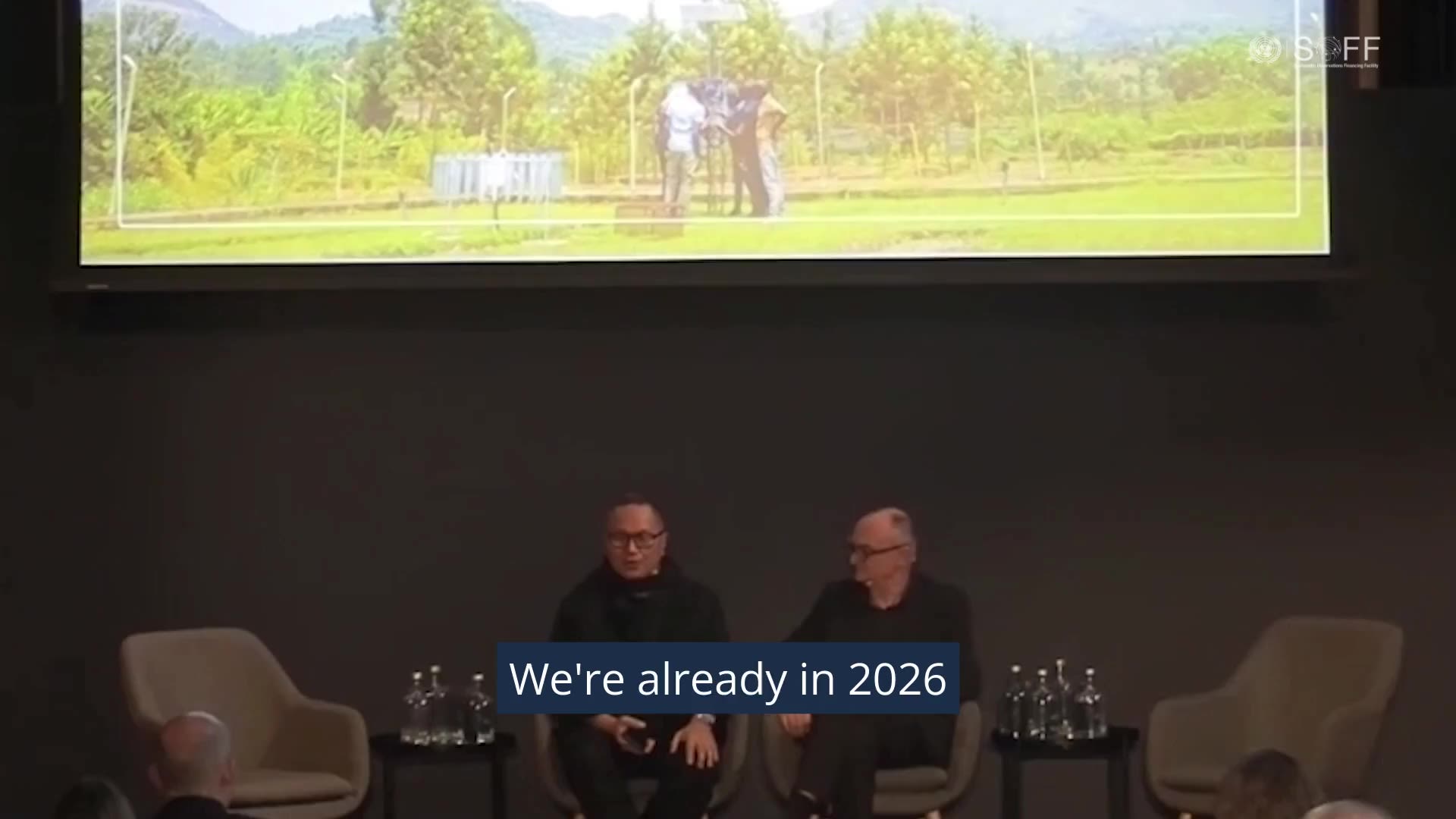
21 October 2026
Six countries were added to the SOFF investment pipeline
At its 15th meeting, the SOFF Steering Committee added six countries to the Investment funding pipeline: Dominica, Saint Lucia, Saint Vincent and the Grenadines, Seychelles, Djibouti and Papua New Guinea. This brought the total number of countries awaiting Investment funding to 12. The governing body also adopted SOFF’s approach for regional, sub-regional and multi-country delivery.
 Built with Shorthand