ACTION
Country leadership is at the core of SOFF. With financial and technical support from SOFF and its partners, countries are identifying their observation gaps and investing in their basic observing systems. This chapter presents progress across SOFF's three phases, Readiness, Investment and Compliance, and highlights milestones of different countries.
THE SOFF PORTFOLIO
Readiness: Building the Foundation
Before investing, countries need to know exactly what is missing and what it will take to close the gap sustainably. Through the Readiness Phase, National Meteorological and Hydrological Services (NMHS) work with advanced NMHS from other countries that serve as Peer Advisors to assess their observing networks, identify gaps and develop country-owned plans for the infrastructure, people, systems and financing required.
64 countries are identifying — or have identified — their observation gaps and the solutions needed to address them.
Readiness budget: USD 9M
Investment: Turning Plans Into Action
Twenty-six countries have approved Investment Phase funding totaling USD 133 million. Across this growing portfolio, national plans are already becoming operational networks.
Investment combines infrastructure, technical assistance and capacity development. Working with UN organizations acting as Implementing Entities and Peer Advisors, countries build the skills, systems and institutions needed to generate reliable observations and share them internationally. Coordination with other programmes helps investments build on existing infrastructure and contribute to wider early warning efforts.
Results are already there: more than 50 rehabilitated or newly installed stations were sharing additional observations internationally by October 2026. These include stations in Chad, Bhutan, Mozambique, Rwanda and Cabo Verde.
Progress means both restoring observations and improving their frequency. In Cabo Verde, stations now transmit hourly observations, replacing six-hourly manual reporting. In Rwanda, SOFF celebrated a major milestone with the inauguration of the first new upper-air station supported by SOFF worldwide. Closing the upper-air data gaps in data-sparce areas is of crucial national, regional and global importance. Radiosonde data density in Central Europe is 164 times higher than in Africa.
In Chad, a maintenance and inspection campaign helped restore regular international data exchange, with NORCAP contributing technical support, including training, software installation and station connectivity. As a result of these combined efforts, 16 surface stations are now transmitting data internationally, 11 of which were GBON compliant in Q3 2026.
Meanwhile, Bhutan, Ethiopia and Tanzania are advancing upper-air infrastructure, preparing the next expansion of essential data for forecasting worldwide.
- 26 countries in Investment Phase
- Investment Budget: USD 133M
- 12 countries waiting for investment funding
Rehabilitated or newly installed stations sharing data
Compliance: Keeping the Data Flowing
Once SOFF-supported countries complete the Investment Phase and demonstrate that their stations reliably share observations internationally, they enter the Compliance Phase. Long-term, results-based financing and continued technical support will then help them maintain their networks and keep the data flowing. Payments are linked to station performance, independently verified by WMO. The first SOFF-supported countries are expected to enter the Compliance Phase in 2028.
In 2026, the SOFF Steering Committee approved the Compliance Phase Framework, delivering on a commitment made when SOFF was created: countries would continue to receive support beyond their initial investments.
The Framework sets out how this support will work. It covers recurring needs such as spare parts, instrument calibration, weather-balloon supplies and maintenance visits, alongside technical advice from Peer Advisors. Countries can also request pooled support for shared regional services.
National financial contributions range from 0% to 25% of eligible operating and maintenance costs, depending on their ability to pay. SOFF assesses this by comparing the size of each country’s economy with the area that needs to be observed, including exclusive economic zones for Small Island Developing States. Countries with fewer economic resources relative to their observation responsibilities contribute less, while continuing to provide staff and basic operating resources. This puts data justice into practice: contributions reflect countries’ capacity to pay, while international support helps sustain the observations they provide for the benefit of all. A striking number – Switzerland has 511 times more economic means to comply with its data sharing obligation than the average of the 64 countries benefitting from initial SOFF support.

COUNTRIES IN ACTION
Every country is different, and there is no one-size-fits-all path to closing observation gaps. Progress can take many forms, from new stations and stronger data systems to trained people, engaged communities and new partnerships. Delivering data justice also means putting countries in the lead, with the resources and technical support to build and sustain their own observing systems.
These are some of the ways SOFF countries are turning plans into action.
Bhutan: Keeping more stations running
In Bhutan, some of the places where weather observations are most needed are also among the hardest to reach.
In 2026, technicians travelled to more than 20 sites, including remote high-altitude and snow stations. They repaired equipment, restored a station that had stopped operating and improved data transmission.
SOFF also supported the optimization of automatic weather stations that were previously installed with support from the Japan International Cooperation Agency. All five stations are sharing data now.
In Tsirang, construction began on the country’s first upper-air station, which will measure conditions high above the ground.
These efforts are helping lay the groundwork for broader investments in climate information and early warning systems. A proposed USD 22 million Green Climate Fund (GCF) project, being developed with UNEP, aims to address further gaps in monitoring, technology and connectivity, building on and scaling up SOFF’s work in Bhutan.
Photo: Damphu Automatic Weather Station, Bhutan National Center for Hydrology and Meteorology
|
Investment Budget |
USD 4.6M |
|
Implementing Entity |
|
|
Peer Advisor |
|
Cabo Verde: Data, every hour
Scattered across the Atlantic, Cabo Verde has highly variable rainfall and limited freshwater. Its weather observations matter locally and help describe conditions across a vast ocean.
At stations in Sal and Praia, measurements were already being taken. The challenge was getting them into the global system. Until recently, observations were manually uploaded every six hours. In 2026, Cabo Verde’s meteorological team connected the stations directly to the international exchange of weather data. Now, Sal and Praia stations are sharing data every hour.
SOFF's work is part of broader efforts to strengthen climate information and early warning systems in Cabo Verde. With support from CREWS, the country developed its national Early Warnings for All roadmap, setting out priorities across the early warning value chain. UNEP, that is also the Implementing Entity for the SOFF Cabo Verde project, has submitted a Green Climate Fund (GCF) concept note to support the roadmap's implementation, with the proposed investment expected to scale up SOFF investments.
|
Investment Budget |
USD 3.9M |
|
Implementing Entity |
|
|
Peer Advisor |
|
Madagascar: Powering weather observations
Madagascar is highly exposed to extreme weather, from tropical cyclones and floods to severe droughts. Reliable weather information is critical, but producing it also depends on something basic: keeping the power on.
Power disruptions interrupt the systems needed to collect, transmit and manage weather data.
In March 2026, Madagascar inaugurated a new solar power system at its Hydrometeorological Forecasting Operations Centre, providing continuous electricity for these essential operations and helping keep meteorological data flowing even when the wider electricity supply is disrupted.
|
Investment Budget |
USD 4.9M |
|
Implementing Entity |
|
|
Peer Advisor |
|
Mozambique: Communities at the centre
A new weather station was coming to Changalane, in Mozambique’s Maputo Province. But before the equipment arrived, the conversation started.
In June 2026, Mozambique’s National Institute of Meteorology met with the community to explain what was being built and why. Schoolchildren learned how an automatic weather station works, while a community meeting in Ronga, the local language, explained weather balloons and what to do if one is found after returning to Earth.
Local ownership also has a practical purpose: helping protect weather equipment from theft, vandalism and accidental damage so observations can keep flowing.
|
Investment Budget |
USD 7.9M |
|
Implementing Entity |
|
|
Peer Advisor |
|
Rwanda: The first balloon rises
In Rwanda, agriculture employs more than two-thirds of the population and contributes about a quarter of GDP. Reliable forecasts matter for decisions made every season, from planting and harvesting to preparing for heavy rainfall.
With SOFF support, Rwanda had already strengthened its surface observing network. But an important part of the picture was still missing: knowing what is happening higher in the atmosphere.
In 2026, Rwanda inaugurated its first automatic upper-air station in Huye — also the first new upper-air station inaugurated through SOFF support worldwide. In a region where upper-air observations are extremely scarce, the Huye station helps fill a major gap in the global observing network.
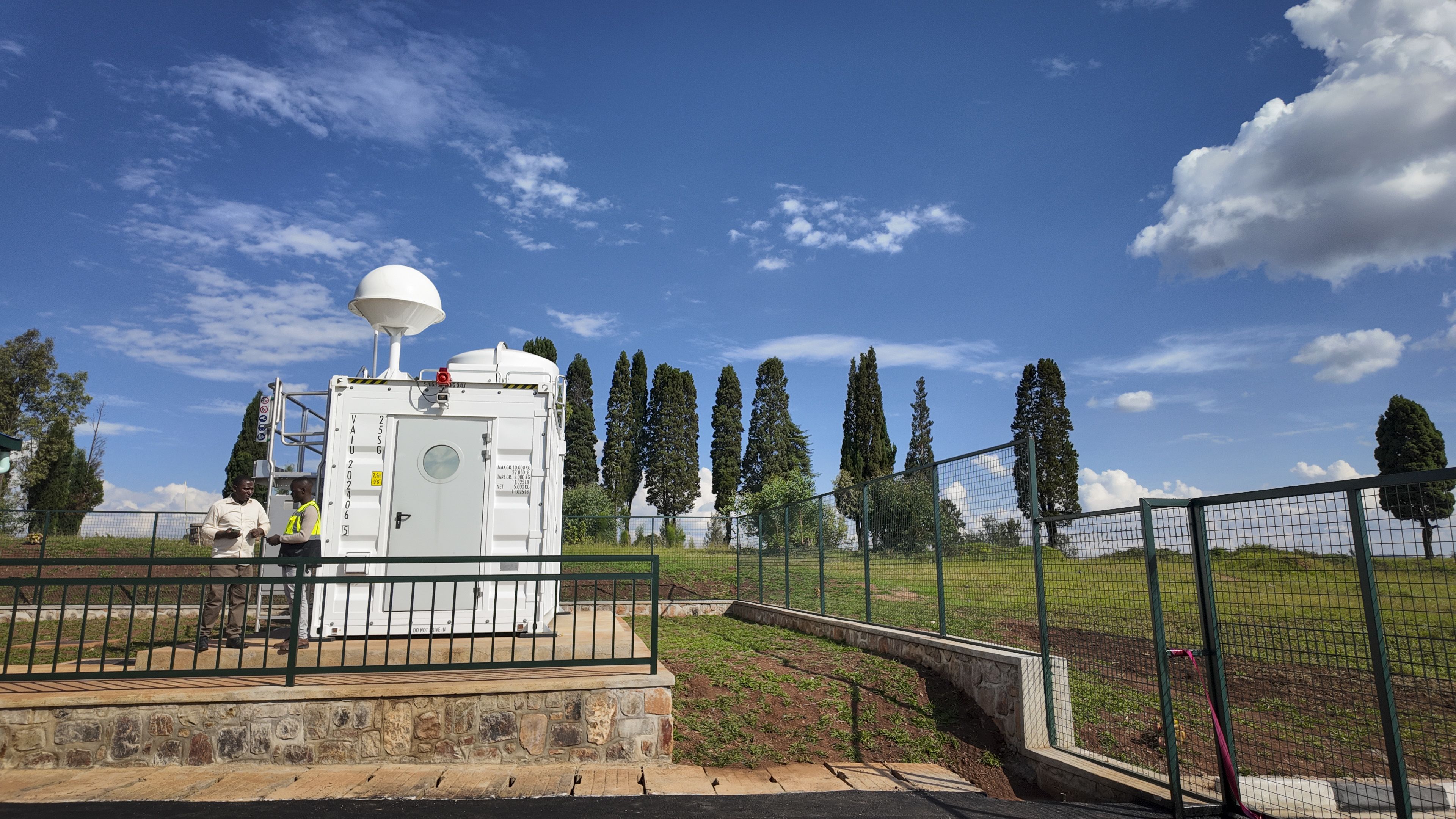
Twice a day, weather balloons measure temperature, humidity, pressure and winds high in the atmosphere. By sharing these measurements internationally, Rwanda can help improve weather forecasts not only for its own population, but also for neighbouring countries and the world.
Around 35 Meteo Rwanda specialists have also been trained to operate, maintain and use the new systems.
|
Investment Budget |
USD 3.5M |
|
Implementing Entity |
|
|
Peer Advisor |
|
Solomon Islands: Making the way for new observations
The Solomon Islands stretch across hundreds of islands in the Pacific, making building and maintaining a weather observing network particularly challenging.
In some places, preparation faced another challenge: unexploded ordnance left from the Second World War. Before new weather infrastructure could be built, specialist teams assessed and cleared planned sites to make the ground safe.
In 2026, equipment for six new automatic weather stations arrived in the country, while designs were completed for three new upper-air stations.
Across the vast Pacific, weather observations remain sparse. Each new station helps fill an important gap, providing data for forecasts at home while contributing to the global observing system.
|
Investment Budget |
USD 8.5M |
|
Implementing Entity |
|
|
Peer Advisor |
|
Next Frontier:
Basic Ocean Observations
The ocean covers around 70% of the Earth’s surface, and marine observations are essential for forecasting weather worldwide. Within countries’ exclusive economic zones, which account for 42% of the world’s ocean surface, the Global Basic Observing Network (GBON) sets requirements for hourly measurements of atmospheric pressure and sea-surface temperature and for sharing these data internationally. By strengthening forecasts and early warnings, these observations help protect coastal communities and support shipping, fisheries and other economic activities.
However, WMO data for June 2026 reveal large gaps and stark inequalities. North America and north-west Europe account for 70% of observations but only 15% of the global requirement. Yet additional observations in these waters cannot fill gaps elsewhere. When each zone’s contribution is capped at its target, 56% of required observations are missing. SOFF-eligible countries meet just 24% of their requirements.
The Pacific is a clear priority. Its 14 SOFF-eligible countries meet only 17% of their requirements, falling to around 7% when the Marshall Islands’ exclusive economic zone is excluded. Together, these 14 countries’ waters cover 5.3% of the world’s ocean but account for 16% of all missing observations.
GBON marine observations are already within SOFF’s mandate, but this support is not yet operational. Current financing covers land-based surface and upper-air observations. Joining previous calls of WMO governing bodies and the Subsidiary Body for Scientific and Technological Advice (SBSTA), in September 2026, the Pacific Meteorological Council unanimously recommended extending SOFF support to marine observations, starting with the Pacific and under Pacific leadership, backed by dedicated additional financing that safeguards existing land-based investments.
The approach proposed by the WMO and The Pacific Community (SPC) would combine national and regional implementation through SOFF’s proven three-phase model of Readiness, Investment and Compliance. By connecting gap assessments and investments in equipment and capacity with long-term support for operations and maintenance, it would help sustain marine observations and their international exchange.
Any SOFF support to GBON marine observations would require dedicated donor funding and a decision by the SOFF Steering Committee.
 Built with Shorthand